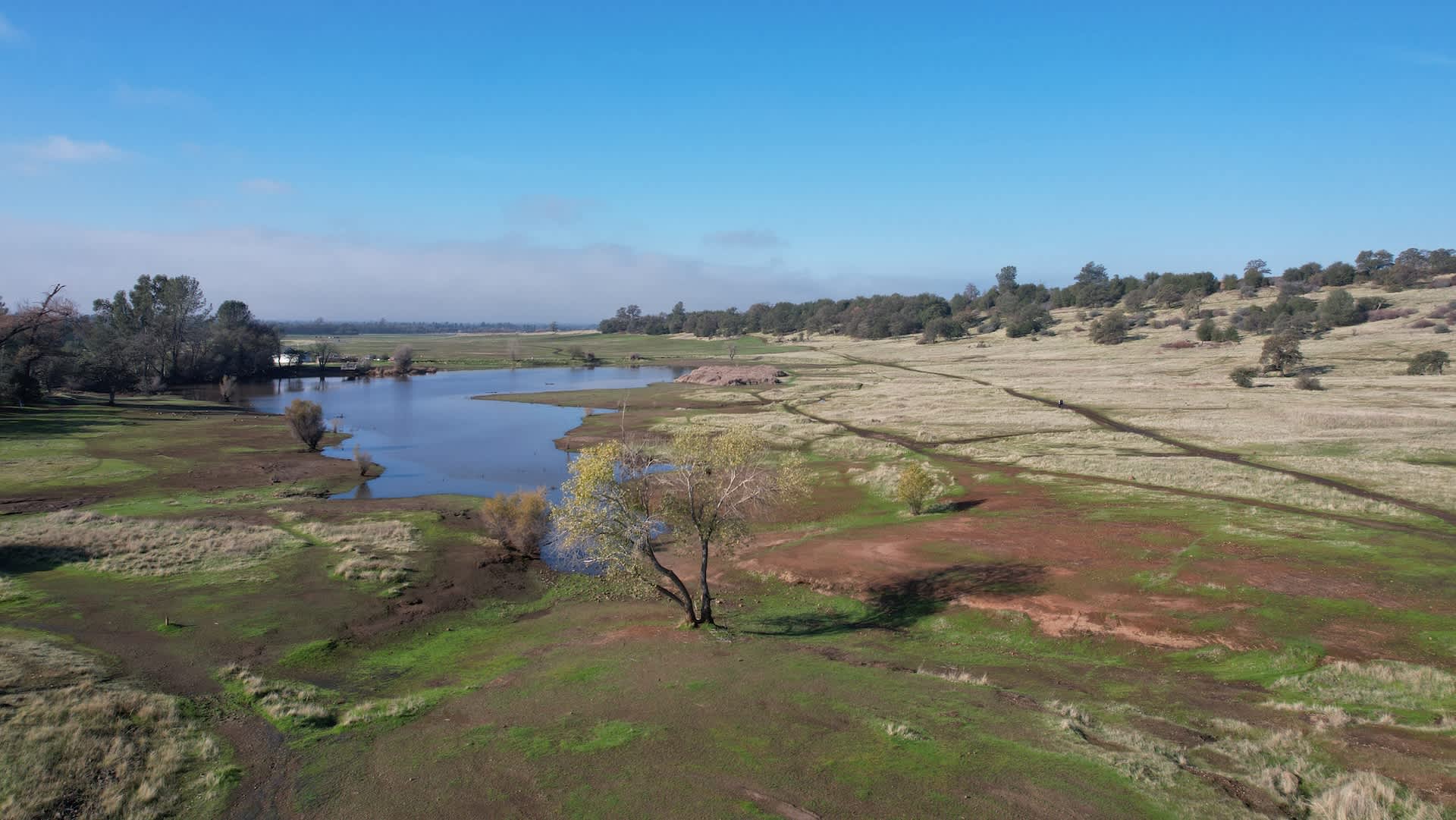
Nearly three feet disappeared from parts of the farmland around Sacramento during the drought years. The change is not a missing chunk of soil at the edge of a field; it is the ground itself settling as water leaves the layers beneath it.
Satellite measurements now show that some areas of the Sacramento Valley are sinking quickly enough to raise a harder question than whether the aquifer will refill after the next wet winter: some of the lost storage capacity may be gone for good. A recent report on the valley's groundwater losses describes subsidence as a warning for a region whose farms depend on reliable water below ground.
When the Aquifer Compresses
Aquifers are not empty underground lakes waiting to be topped off. They are layers of sand, gravel, silt, and clay that hold water in their pores. Pumping can reduce the pressure that props those layers apart; when fine-grained material compresses, the land above it drops, and part of that underground space may not reopen when groundwater levels recover.
The Sacramento Valley's problem is therefore measured in more than feet of elevation. Subsidence can alter the grade of canals and drainage works, stress roads and other farm infrastructure, and make wells less dependable. A field can remain perfectly flat to the eye while the system that moves water across it has quietly acquired a new slope.
A July analysis of the aquifer's drought-era behavior found residual subsidence rates after the drought, a sign that parts of the basin may be responding slowly—or permanently—to the drawdown. That distinction matters to growers making investments that are expected to serve for decades.
A Valley Built Around Water Levels
The valley is one of the country's important agricultural regions, producing the fruits, nuts, and vegetables that make California's water accounting unusually consequential. If groundwater becomes harder to recover, production does not simply lose a reserve tank. It loses flexibility during dry years, when surface deliveries arrive late, are reduced, or must be stretched across permanent plantings.
The state already asks local groundwater agencies to bring overdrafted basins into balance under the Sustainable Groundwater Management Act. In the San Joaquin Valley, growers are testing crop changes and fallowing strategies against that requirement; a California farm report on winter grains describes the search for ways to keep land productive while using less groundwater.
For Sacramento Valley operations, the immediate challenge is more physical than rhetorical. A well can still produce water while the basin beneath it loses usable capacity. That makes pumping records, groundwater-level trends, land-elevation data, and the condition of nearby canals useful pieces of the same farm-management file.