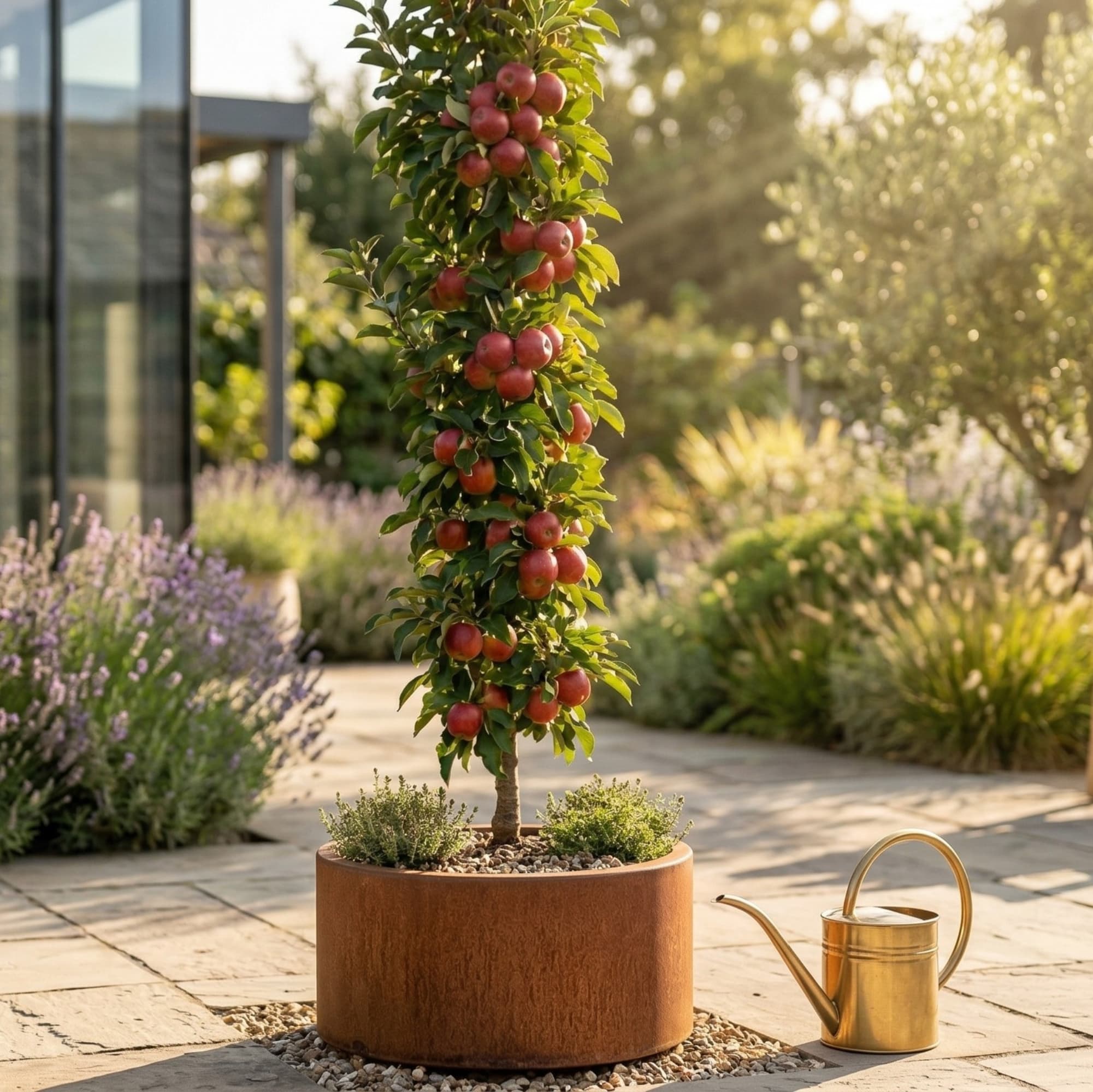
At Stan Devoto's orchard in Sebastopol, the season's arithmetic is unusually spare. The Gravenstein trees have produced a significantly lower yield this year, another thin line in the ledger for a crop that once helped define Sonoma County.
The problem is larger than one orchard. The Press Democrat reports that the drop in production is raising concerns for local farmers and for the future of Sonoma's legacy apple industry, where an old variety still carries more history than acreage. The Gravenstein industry’s current challenges are arriving as growers search for ways to make small orchards pay.
A Short Harvest in Sebastopol
Longtime apple producer Dave Hale and his daughter harvested only eight 40-pound boxes from 20 trees, compared with previous years. For a family tending a small block, that kind of result leaves little room for waste, weak prices, or the costs that keep an orchard standing between harvests.
Gravensteins are closely tied to the Sebastopol area’s agricultural identity, but identity does not pay for pruning, picking, or land. A poor crop makes each of those jobs harder to spread across the fruit that reaches a buyer.
Finding a Use for Small Orchards
One possible piece of the answer is taking shape in Santa Rosa. Gold Ridge Organic Farms owner Brooke Hazen has leased a 20,000-square-foot facility there to process apples for North Bay growers, creating new local processing capacity at a moment when fresh-market production is under strain.
Processing does not turn a light crop into a heavy one. It can, however, give growers another route for fruit that does not fit a fresh-sales channel and help connect small orchards to products beyond a box of apples. The facility is expected to handle multiple apple products, according to local reporting, which may matter in a region where orchard sizes are measured in trees as often as acres.
The variety also has a public life outside the orchard. Sebastopol's Gravenstein Apple Fair, scheduled for Aug. 8 and 9, puts pies, fritters, juice, jam, and hard cider in front of consumers; hard cider has become a prominent part of the fair's appeal. That attention can keep the name familiar, though familiarity alone cannot replace a dependable harvest.
For growers, the practical questions now sit close to the ground: how much fruit will be available, where can it be sold or processed, and whether the economics justify keeping older trees in place. Sonoma's apple future may depend less on one big return to the past than on enough workable outlets for the orchards that remain.