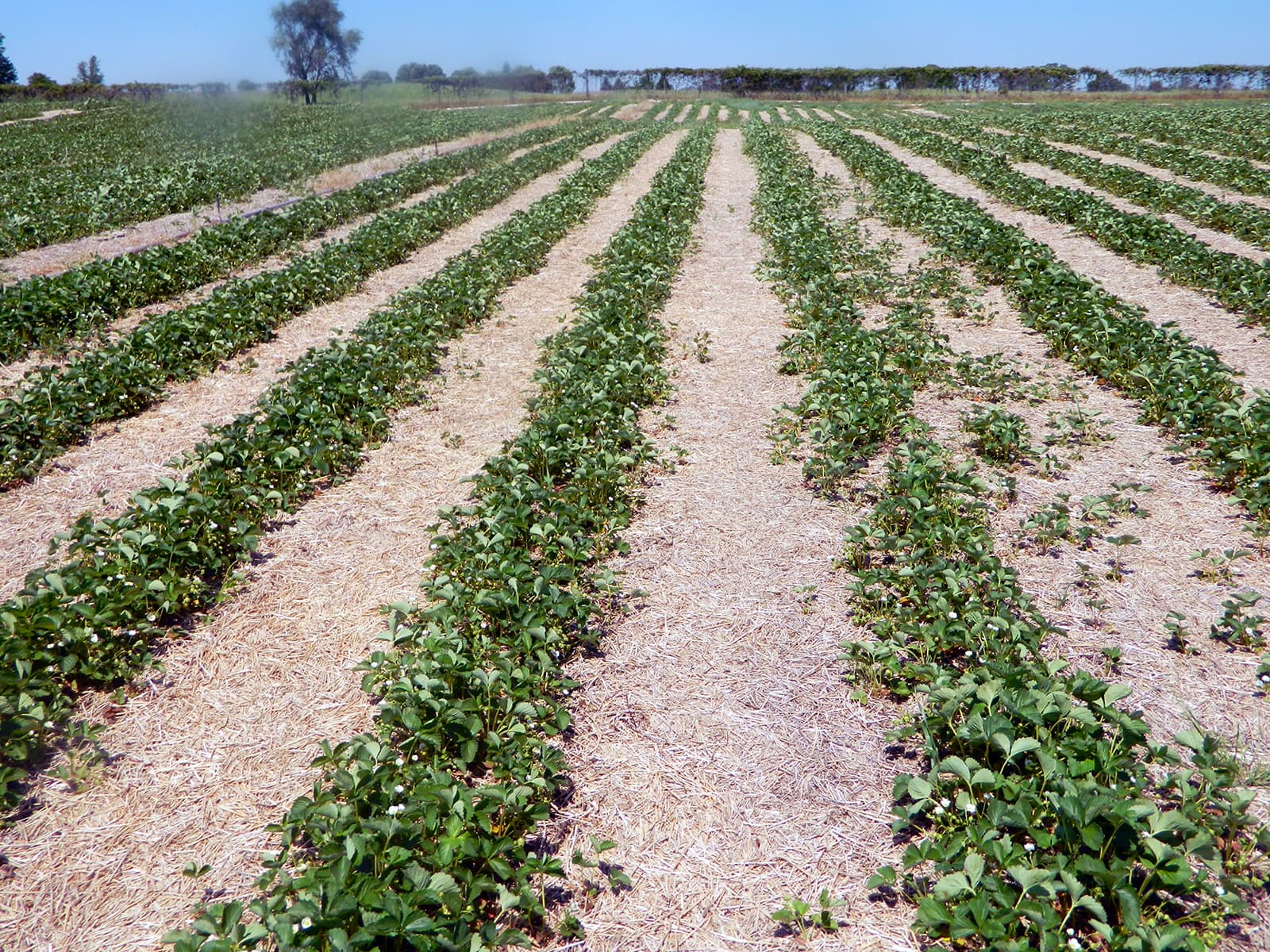
A strawberry cultivar can spend years being reduced to a few words: early, steady, profitable. UC Surfline arrives with a name that sounds more like a beach break than a line in a planting plan, but its useful distinction is straightforward — it is intended to put substantial production on the early side of the harvest while continuing to yield.
The new cultivar description identifies UC Surfline as a strawberry developed for California growers who need production to begin strongly and hold up over time. That combination matters in a crop where the first marketable fruit can shape the economics of the planting long before the field is finished producing.
An Earlier Start, With Legs
The central claim is not simply that UC Surfline produces early fruit. It is that the cultivar offers high early yields alongside sustained yields. For a California strawberry operation, that makes the variety’s appeal a question of harvest pattern rather than a single impressive first pick.
That distinction leaves room for the practical questions growers normally ask after the glossy part of a cultivar description: how the plants fit an existing schedule, how they perform under a farm’s conditions, and whether the yield pattern justifies changing part of a familiar planting mix. The research identifies the production goal; it does not, by itself, settle those farm-level decisions.
Built at Davis for a California Market
Researchers at UC Davis developed UC Surfline with the stated aim of improving profitability for California strawberry producers. The cultivar’s breeding purpose is therefore tied to the state’s production system, rather than presented as a general-purpose strawberry for any region.
That California focus also explains the broader ambition attached to the release. UC Surfline is expected to improve the market competitiveness of the state’s strawberry industry — a claim that rests on getting more saleable production into the field’s early window without giving away the rest of the season.
The variety’s name may be new to a planting manager, but the calculation is old: a cultivar earns its ground through the combination of timing, volume, and dependable performance. UC Surfline is being offered as an attempt to improve that calculation from the breeding side.
The Planting Decision Comes Later
For growers, the next useful information will be less about the novelty of the release than about access and fit. Plant material, nursery availability, regional trial results, and performance under individual production systems will determine whether the cultivar moves from a research paper into commercial acreage.
The UC Surfline research report gives California strawberry growers a new cultivar to evaluate, not a planting instruction. The next chapter will be written in trial blocks, nursery catalogs, and harvest schedules — the places where a promising name has to do more than sound good on paper.