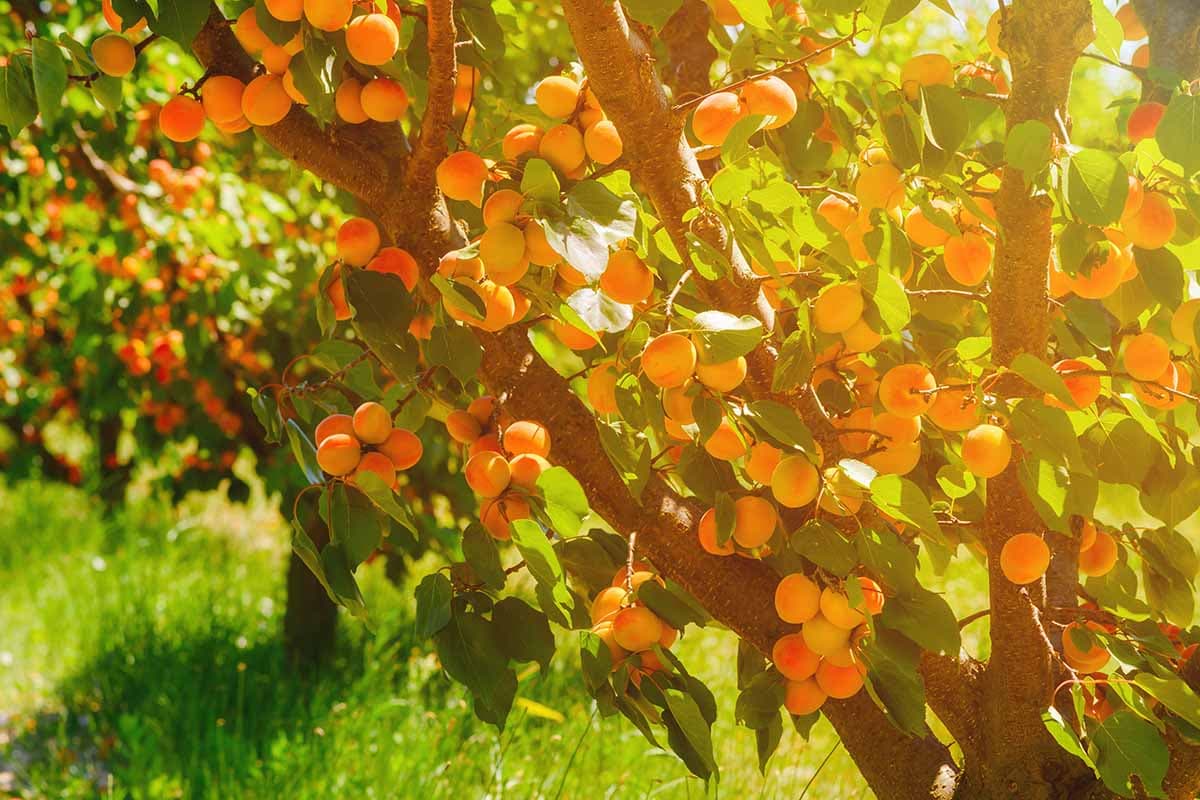
The cultivar at the center of this research has a name that sounds almost like a person: Zaginya. In the study, it is also the fixed point around which a newer kind of orchard nutrition is being tested—small-scale fertilizer materials paired with organic inputs, aimed at the tree rather than the fertilizer shed.
Researchers report that combining Nano NPK with organic fertilizer significantly improved the growth and productivity of apricot cv. 'Zaginya' in a study published in Applied Fruit Science. The result is less a replacement recipe than a signal that the familiar fertilizer program may be getting a more precise companion. The published study does not, from the available summary, provide the rates or trial details needed to turn that signal into an orchard prescription.
A Smaller Package for Tree Nutrition
Nanotechnology is being applied to crop nutrition because materials engineered at very small scales may help nutrients move more efficiently through a plant. In practical terms, the attraction is straightforward: get more of the applied nutrient to the crop and leave less of the conventional fertilizer burden behind.
That idea is moving beyond apricots. A recent industry report describes nanotechnology as a way to improve precision in crop nutrition and fruit quality, though those goals are still broader than the evidence reported for Zaginya. The wider discussion places the apricot work in a field that is still trying to connect laboratory-scale materials with ordinary farm decisions.
The Organic Half of the Equation
The study's useful wrinkle is that the nano fertilizer was combined with organic fertilizer rather than presented as a stand-alone fix. That matters for growers who already build fertility around organic amendments and want a sharper nutrient tool without throwing out the rest of the program.
Other researchers are pursuing foliar nanofertilizers designed to help crops withstand environmental stress, suggesting that future products may be sold around several jobs at once: nutrient delivery, stress response, and input efficiency. That work remains at the research-and-development stage, which is a considerable distance from a labeled product in an orchard.
For growers, the next useful information is therefore quite concrete: application timing, nutrient rates, treatment costs, multi-year performance, and comparisons with the farm's existing fertility plan. Until those pieces are available, Nano NPK plus organic fertilizer is best understood as a promising trial treatment—not a reason to abandon a working orchard program.