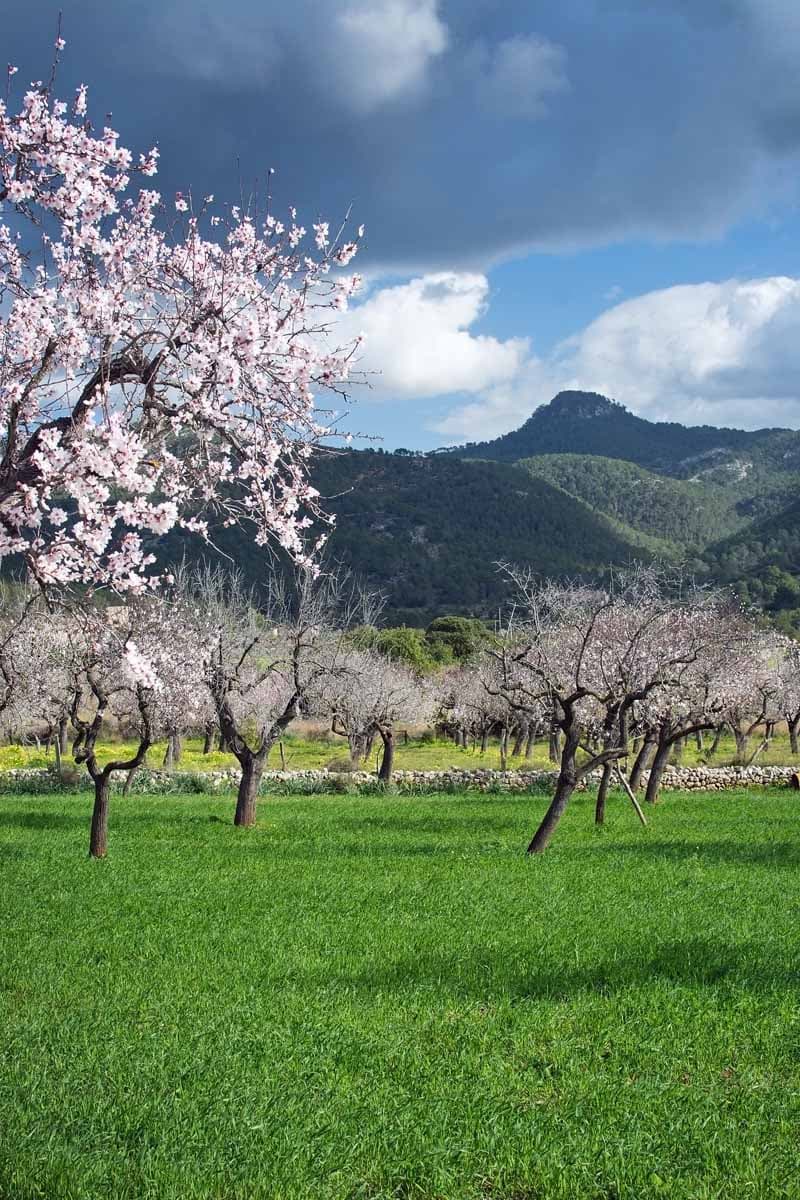
An almond orchard is a place of small openings. As the hull begins to separate from the shell, the crop moves into a stage when timing matters and the difference between a protected nut and a damaged one can be hard to see from the seat of a tractor.
That narrow window is where a Kern County field study put its attention. The trial, reported in Arthropod Management Tests, evaluated insecticides for navel orangeworm control in almonds at hull split.
A Trial at the Opening
Navel orangeworm is managed through a series of decisions that meet the orchard calendar: sanitation, variety timing, monitoring and treatment. This study focused on the treatment piece, asking how insecticides performed when the almond hull opened enough to expose the developing crop.
The work was conducted by UC Cooperative Extension specialists in Kern County, where almond production runs through a hot, tightly scheduled season. The researchers’ purpose was practical rather than ornamental: to improve pest management in a crop whose protection decisions are made across thousands of acres and a handful of critical windows.
The published evaluation belongs to the field-trial tradition of agricultural entomology, where a treatment is tested against the unruly conditions of an orchard rather than a clean laboratory bench. That distinction matters. Hull split arrives by variety and block, while pest pressure does not always respect the neatness of a calendar.
The Useful Part Is in the Timing
For almond growers, the value of this kind of work is less a new slogan than a better-fitting tool. An insecticide choice made at hull split has to line up with the orchard’s development, the pest’s activity and the practical limits of a spray operation. The study offers another piece of evidence for that conversation between grower, PCA and field crew.
The Kern County research does not, in the available summary, provide the comparative results, product rates or a recommendation that can be lifted directly into every California orchard. Those details are the difference between knowing that a trial happened and knowing what to put in the tank.
That gap is not a flaw in the question. It is the ordinary inconvenience of pest management: a result has to travel from a research plot into blocks with different varieties, hull-split dates, canopy conditions and equipment. California almond growers can use the evaluation as a reference point while keeping the final treatment decision tied to their own orchard records and current label directions.